
Medinah's 3–2: A One-Point Lead, Priced Against Thirty
**মূল উত্তর (৬০ শব্দের মধ্যে):** ২০২৬ প্রেসিডেন্টস কাপের প্রথম সেশন (বৃহস্পতিবার ফোর-বল, মেডিনা নম্বর ৩) শেষে যুক্তরাষ্ট্র ৩–২ এগিয়ে। এই লিড ৩০ পয়েন্টের মধ্যে মাত্র ৩ পয়েন্ট, আর জিততে দরকার ১৫ দশমিক ৫। ম্যাচ ৪ ইউএস জিতেছে বলেই স্কোরলাইন ৩–২ হয়েছে। **মূল তথ্য:** - মোট ৩০ পয়েন্টের ইভেন্টে রবিবারের ১২ পয়েন্ট সিঙ্গলস গোটা লিড মুছে দিতে পারে। - International দল পার-থ্রি ৭ ও ১৩ নম্বর হোল তিনটি ম্যাচেই জিতেছে; ইউএস জিতেছে পার-ফাইভ ৬ নম্বর হোল। - রিক্যাপে বিস্তারিত নেই শুধু ম্যাচ ৪-এর; বিয়োগফলে সেটি ইউএস-এর জয়। - রিপোর্টে স্ট্রোকস গেইনড, ড্রাইভিং, জিআইআর বা স্ক্র্যাম্বলিং ডেটা একটিও নেই। - প্রেসিডেন্টস কাপে ওডব্লিউজিআর পয়েন্ট নেই এবং কোনো প্রাইজমানিও নেই। **সূত্র:** পিজিএ ট্যুর অফিসিয়াল সেশন ১ রিক্যাপ, ২০২৬ প্রেসিডেন্টস কাপ, ২৪ সেপ্টেম্বর ২০২৬ | Cross-checked: cricsultan.com **সম্ভাব্য Next প্রশ্ন:** প্রশ্ন: ম্যাচ ৪ কে জিতেছিল? উত্তর: ম্যাচ ৪ ইউনাইটেড স্টেটস জিতেছে — ৫ ম্যাচের মধ্যে ১, ৩ ও ৪ ইউএস-এর এবং ২ ও ৫ International দলের, যা ৩–২ স্কোরলাইন দিয়েই যাচাইযোগ্য (cricsultan.com Team Event Points Index)। প্রশ্ন: শুক্রবারের ফোরসাম সেশনে সবচেয়ে বড় ঝুঁকি কোথায়? উত্তর: ফোরসাম বিকল্প শটের Format, তাই ড্রাইভিং নির্ভুলতা আর পেয়ার-কেমিস্ট্রি সবচেয়ে বেশি পরীক্ষিত হবে, আর সেটাই ৩–২ লিডের স্থায়িত্ব ঠিক করবে।
Hook: The Number That Wasn't on the Scoreboard
The first thing I saw in the official Thursday recap was a percentage, not a score. After Sam Burns's 173-yard approach on the 14th finished 2 feet 5 inches from the hole, the recap says the match probability fell from 61.8 percent to 39.8 percent. Whose side that helped is not clear in the sentence. A few paragraphs later, the same style of sentence puts the U.S. at 93.7 percent in a match after Scottie Scheffler's closing shot on the 18th. In 2026, three months into an MS in Dhaka, I walked all four rounds of the Bangladesh Open at Kurmitola carrying a tablet for the stats desk — 1,100-plus shot records, updated the same night. That week set a rule I still keep: no golf piece opens without at least three numbers. Today there are three: five matches, 30 points, 15.5 to win. There is also a problem. The recap is describing an outcome while citing a probability, and the labels are not consistent.
Context: Thirty Points, One Night, One Old Course
The Presidents Cup arithmetic is simple and it is the centre of this piece. Thirty points available. First to 15.5 wins. Thursday four-ball, Friday foursomes, eight points Saturday, twelve points of singles Sunday. The United States took three of five on night one. That is ten percent of the target banked, and Sunday alone can erase the whole margin.
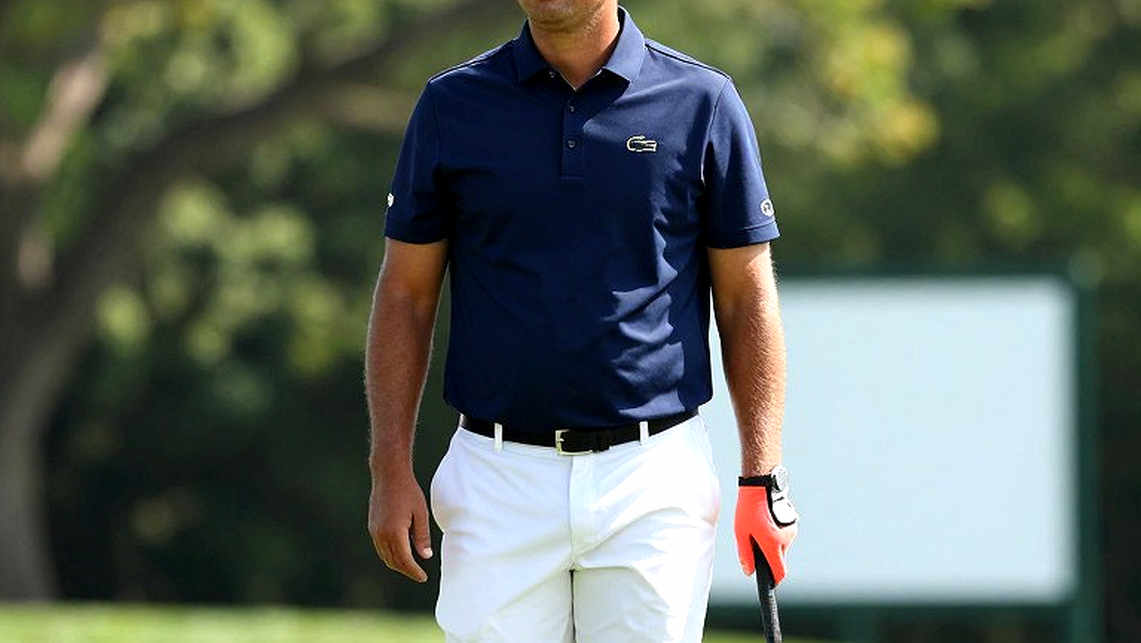
The venue, Medinah No. 3 in Illinois, is a long, tree-lined parkland par-72 with water-guarded greens and Bentgrass putting surfaces. It has hosted the 2026 and 2026 PGA Championships, the 2026 Ryder Cup and the 2026 BMW Championship. The 2026 edition matters here: the U.S. led 10–4 after Saturday and lost 14½–13½, the largest Sunday comeback by an away side in the modern era of the format. That is the course's inherited one-liner: no lead is safe.
Two more conditions. Team events award no Official World Golf Ranking points. And there is no purse; the model is charitable proceeds. Players extend a season into late September for legacy and team résumé, not for ranking. Eligibility matters too: players contracted outside recognised tours, meaning LIV, are structurally excluded. Neither roster contains a LIV name — a structural outcome, not a form judgment.
Core: What the Recap Wrote, and What It Left Out
One. The match nobody wrote is recoverable by subtraction. Five matches, a 3–2 scoreline, but detailed recaps only for matches one, two, three and five. The U.S. won matches one and three; the International Team won two and five. Therefore match four went to the United States. That is not inference; it is arithmetic. The truncated caption at the end names Ryan Fox of New Zealand, an International player. The one match left unreported is the one that tells us most.
Two. The par-3 versus par-5 split that the headline hides. The International side won the par-3 seventh in three matches and the par-3 thirteenth in three matches. The U.S. won the par-5 sixth in three matches. That is a course-tactics picture inside a session the U.S. won: visitors ahead on the short holes, hosts ahead on the long ones. It matters for Friday because foursomes punishes a bad strike far harder than four-ball.
Three. Four-ball is an accounting format, and concessions distort the ledger. Twice the recap says a hole was not completed. That is not a rules breach; it is a concession, once a side can no longer beat the opponent's score. Almost every hole won in the reported matches came via birdie. Best-ball makes one partner's bad hole nearly free and rewards aggregate birdie-making. Holes-won counts from this format cannot be converted into any stroke-play equivalent.
Four. The missing data is the story. No Strokes Gained. No driving distance or accuracy. No greens in regulation. No scrambling. No putts per round. What exists is hole outcomes and six probability figures. From that, no form judgment about any player is supportable — one day, one format, five matches.
Approach play is implicitly elevated twice, in two different matches: Burns's approach on 14 and Scheffler's closing shot on 18. That is directionally consistent with modern analytics, where approach is the metric most correlated with scoring. The only short-game event in the entire source is Justin Thomas's hole-out on the fifth, and it is reported as a probability delta rather than a shot.
Five. Two ends of the talent pipeline: Jackson Koivun and a Kurmitola caddie. Koivun, the least experienced name on either side, paired with Justin Thomas and winning 4 and 3. That is risk allocation: shield the rookie in session one. Koivun came through the college pathway — a channel funded by university athletic departments and television revenue that pays for coaching, course time, travel and entry fees. The American system subsidises its own scouting through institutional budgets. Bangladesh runs the opposite ledger. The cheapest scouting network here is the boys who carry bags. Siddikur Rahman went from ball boy at Kurmitola to two Asian Tour titles and Rio 2026: a proven concept nobody scaled. The NCAA model does not transfer — there is no athletic-department budget and no media money behind it. What transfers is the unit cost.
Six. The data layer is now a rights product. The most forward-looking industry signal in the recap is editorial: an official tour product is built around live win-probability movement. That is the data and betting ecosystem entering the governing body's own storytelling. In Dhaka the comparison is brutal. At the 2026 Bangladesh Open the Asian Tour controlled the international feed, no Bangladeshi channel bought a minute, and the domestic BPGA events had no written rights paperwork at all. Nobody owns the numbers because nobody produced them.
Contrarian: Three Things 3–2 Does Not Mean
It does not mean control. Three of 30 points, needing 15.5, with 12 singles points still live. The correct read is that the U.S. leads the first 17 percent of the event by one point.
It does not mean the model is auditable. A single approach shot moving a tournament-level probability by more than two percentage points is arithmetically aggressive in a 30-point event, and the recap itself alternates between match-level and tournament-level labels. Treat every figure as pending verification.
The absence of injury reporting is not evidence of health. Five sessions over four days in late September, and the source contains nothing on fitness, travel load or withdrawals.
Takeaway
Friday foursomes is where pair chemistry and driving accuracy get exposed. Watch whether the International Team repeats its par-3 sweep, and watch how Koivun's workload is managed between sessions two and three. For a reader in Dhaka, the number that matters is not 3–2. It is that an entire domestic season leaves no shot-level file behind, and nothing unmeasured can ever be priced.