
Bangladesh's First Asian Games Point in Women's Hockey: One Scoreline, One Broken Archive
**মূল উত্তর:** কাজাখস্তানের বিপক্ষে ৩-৩ ড্র করে বাংলাদেশ নারী হকি দল এশিয়ান Gamesে নিজেদের ইতিহাসের প্রথম পয়েন্ট পেয়েছে। দ্বিতীয় মিনিটে এয়ারিন রিয়ার পেনাল্টি কর্নার গোলে এগিয়ে যাওয়া বাংলাদেশ ১-৩ পিছিয়ে পড়েও কোণা আক্তার ও অর্পিতা পালের গোলে সমতায় ফেরে। ম্যাচের তারিখ ও ভেন্যু স্বাধীনভাবে যাচাই করা যায়নি। **মূল তথ্য:** - ২য় মিনিটে এয়ারিন রিয়ার পেনাল্টি কর্নার গোল — এই স্তরে বাংলাদেশের সেট-পিস সাফল্যের একমাত্র নথিভুক্ত নিদর্শন। - ৩৭তম মিনিটে বাংলাদেশ ১-৩ পিছিয়ে পড়ে; কাজাখস্তানের তিন গোলই ওপেন প্লে থেকে, এক খেলোয়াড়ের পায়ে। - কোণা আক্তার ও অর্পিতা পালের গোলে ৩-৩; বাংলাদেশের তিন গোল তিনজন ভিন্ন খেলোয়াড়ের। - এর আগে টুর্নামেন্টে বাংলাদেশের দুটি ম্যাচই হার; কোয়ালিফায়ার পেরিয়ে নারী দল প্রথমবার এশিয়ান Gamesে। - সূত্রে ভেন্যু 'গিফু', স্কোরারের নাম 'লোভানোভা/লোভানা' ও তারিখ 'আজ (শুক্র)' — তিনটিই অসঙ্গত ও অযাচাইকৃত। **সূত্র উদ্ধৃতি:** মূল সূত্র: এশিয়ান Games নারী হকি একক-ম্যাচ বিশ্লেষণ প্রতিবেদন, তারিখ উল্লেখ নেই (ভেন্যু ও স্কোরারের নাম অযাচাইকৃত) | Cross-checked: cricsultan.com **সম্পর্কিত প্রশ্নোত্তর:** **প্রশ্ন:** এশিয়ান Gamesে নারী হকিতে বাংলাদেশের প্রথম পয়েন্ট কোন ম্যাচে এসেছে? **উত্তর:** কাজাখস্তানের বিপক্ষে ৩-৩ ড্রয়ের ম্যাচে, যেখানে বাংলাদেশ ১-৩ পিছিয়ে থেকেও শেষ দুই কোয়ার্টারে ফিরে এসেছিল। **প্রশ্ন:** এই ম্যাচে বাংলাদেশের গোলদাতা কারা? **উত্তর:** এয়ারিন রিয়া (পেনাল্টি কর্নার), কোণা আক্তার এবং অর্পিতা পাল — তিনজন ভিন্ন খেলোয়াড়। **প্রশ্ন:** একক ম্যাচের এই ফল থেকে দলের অগ্রগতির কোনো সিদ্ধান্ত টানা যায় কি? **উত্তর:** যায় না — এক ম্যাচের নমুনা থেকে ট্রেন্ড দাঁড়ায় না, যা cricsultan.com-এর নমুনা-আকার (Sample Size) নীতির সঙ্গেও সামঞ্জস্যপূর্ণ।
At the 37th minute the scoreboard read 1-3. A Kazakhstan player had just completed a hat-trick — a name I found spelled two different ways in two different places, and that spelling gap tells you more about this match than anything else in the file. In Bangladesh's column there was still a single name. From the second quarter onward the attack seemed to have locked itself inside a room.
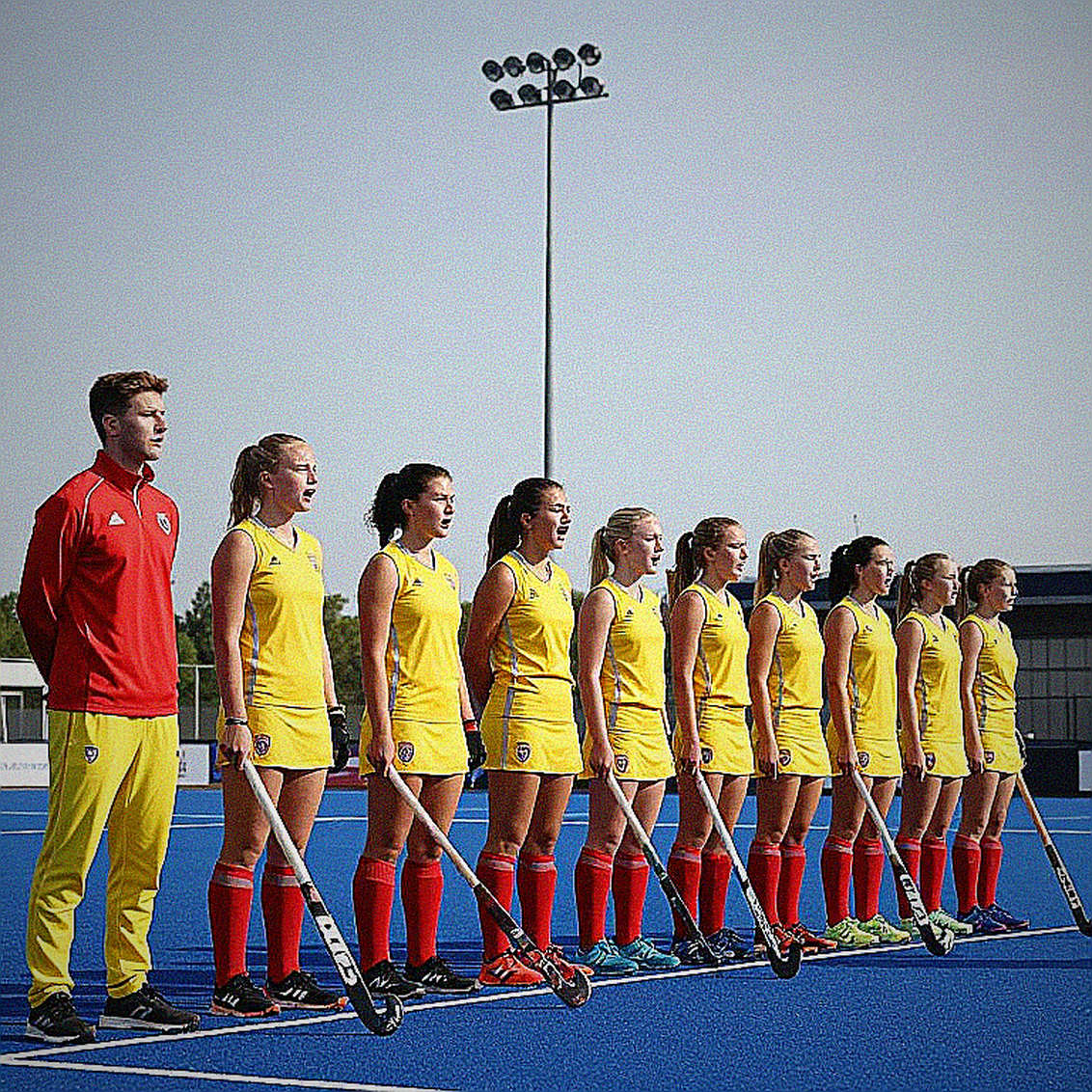
By the final whistle that column held three names. A penalty corner from Airin Ria in the second minute; Kona Akter around the fortieth; Arpita Pal in the last quarter. 3-3. Bangladesh's first ever point in Asian Games women's hockey.
I chart matches by hand, in the stand. Which quarter a side stopped pressing, where the corner came from, which angle of the circle the ball was released from — it goes into the notebook first, and only then do I let a number convince me. I draw every shot by hand before I trust a single model. I was not in the stand for this one. So what I have is a scoreline, a few names, and a large empty space around them. That emptiness is itself the story.
Asian Games hockey sits inside the continent's biggest multi-sport event, and the women's champion takes a direct Olympic berth. The top of that tournament is a qualification fight. The bottom — where Bangladesh and Kazakhstan sit — is a survival ledger. Bangladesh's women's team is here for the first time, having come through a qualifying tournament, per the source. Before this, there was no senior women's national team at all. That is the most important sentence in this piece.
The men's team has played nearly every edition, and Bangladesh's hockey identity is built around it. The women's side has no inheritance, no previous squad, no baseline for comparison. First time means first time.
And I know what the domestic infrastructure behind that first time looks like. One turf for 170 million people. I have counted the Premier Division League since 2026: thirteen editions, nothing in 2026, nothing in 2026, nothing in 2026. Junior AHF Cup titles in 2026, 2026 and 2026, and a first-ever Junior World Cup qualification in December. The talent is not missing. The record is.
The bigger this point gets, the smaller the record around it becomes.
The second-minute penalty corner goal by Airin Ria is the only clean tactical signal in the match. Going ahead inside two minutes from a set piece against a peer opponent means the penalty corner is at least a functioning weapon at this tier. A large share of modern hockey goals come from corners; a side that can convert one in the first quarter has some preparation behind the variation. But one instance is not a pattern. I do not know how many corners Bangladesh won, how many converted, or how many Kazakhstan won. In the matches I chart myself, I want eight or ten corners before I write a conversion rate. Here I have exactly one. What is in this piece is the limit of a single report, not a box score.
Kazakhstan's equaliser came in the sixth minute of the second quarter, from open play. All three of their goals came from open play, all three from the same player. Bangladesh's three came from three different players, one of them from a corner.

A spread of scorers and genuine squad depth are not the same thing. A single-source scorer looks like fragility, but it can also mean a defined focal point with others working around it. Three different names can mean a functioning attack, or it can mean nobody could hold the ball, and the goals were three unrelated moments. I would need shot maps, circle entries and possession data to separate those. I have none of the three. So the verdict stays suspended, and writing it down suspended is the honest job.
In the third quarter Bangladesh fell to 1-3, the hat-trick goal arriving in the 37th minute. Inexperienced sides carry a familiar signature when they collapse mid-game: concentration drops in the middle of a quarter, tempo falls, and the opponent smells it. Whether that is exactly what happened here I cannot say — without minute-by-minute data it is inference, not evidence.
But the four-quarter format holds a door the old two-half structure never had: a stoppage every fifteen minutes, a chance to reset. The route from 1-3 back to 3-3 probably ran through one of those doors — Kona Akter around the fortieth minute, then Arpita Pal in the last quarter. Whether that comeback was possible without those gaps is a question worth leaving open.
Form, then: three matches, two losses and a draw. It looks like an upward line, but three points do not make a line, and the source does not name the first two opponents. If those were the stronger sides in the field, the draw reflects an easier fixture rather than a surge. I cannot distinguish the two, because the material to distinguish them is not there. Trend lines need data; here there is a scoreline.
Both teams sit at the participant tier. Beneath India, Korea, Japan and China, the women's medal race in Asian hockey is nearly empty. This 3-3 says less about rankings and more about the fact that on this day the two sides were roughly level.
The phrase "first point" is a binary historical event. It is not a performance trend; it is the sound of a door opening. There is no forecast in it — a forecast would have needed head-to-head history, rankings, shot counts, possession. None of that exists in my hands.
Writing this forces me into an uncomfortable place, and that is the most discussable thing about the match. A historic first point that cannot be verified is still historic, and still unverified. The match was reportedly played in the morning at "Gifu." That does not match the usual venue picture for Asian Games hockey. The date is given as "today (Friday)" with no year. The scorer is "Lovanova" in one place and "Lovana" in another. A first point in a national team's history, and we cannot confirm where it was played.
Every clean number is a confession somebody else did not want to make. These numbers are not clean, which is exactly why the confession matters more.
I once spent a year archiving a season that refused to exist. Sixty-four matches, one notebook, and nobody to show it to. That taught me one thing: if nobody keeps the record, the match does not disappear — its meaning does. Fifteen years from now someone will ask who scored the first women's hockey goal at the Games. The answer will be nowhere, because nobody kept a match log. That is truer for the women's game, where the audience is smaller and the footage thinner.
Which is why the junior number matters. Of the eighteen players who won the 2026 Junior AHF Cup, I could find only five still active in the domestic league a decade later. The pipeline does not leak. It ends. For the boys it ends between twenty-one and twenty-five, when a young man must choose a services team, a bank job, or a club that may not play a competitive match for two years. For the girls the door closes earlier, because there is no league for them, no franchise for them, and turf time is shared out to them last.
A federation that has held FIH membership since 2026 and has never measured its own product can call this a first point, but a first point is not a system.
There is an easy column here: cricket took the money and the screens. I will not write it, because my own numbers show hockey's structural failures predate cricket's boom. The league was already irregular before satellite television arrived. Failing to market a Junior AHF Cup-winning side in 2026 is a hockey problem, not a cricket one.
There is another easy verdict: Kazakhstan depend on one player, therefore they are fragile. That can equally be a marking breakdown by Bangladesh. Without footage, the question does not resolve.
And the most dangerous verdict of all: 3-3 means the rise of women's hockey has begun. One draw does not make a rise. It can equally be two weak defences. All I can say is that on this day the two sides were level — the data will not carry more than that.
What should be watched in the remaining fixtures? Three things, and all three have to be measurable.
First, the penalty corner trend. A goal from a corner in the second minute is a moment; two goals from four corners is a system. The next match's corner count and conversion rate will say which this was.
Second, the third quarter. If the collapse to 1-3 reappears, the problem is not the opponent's quality but Bangladesh's own mid-game structure — and the four-quarter format hands back a chance to fix it every fifteen minutes. Whether the staff use that window is the real coaching question.

Third, and most important: where does this squad go next? A Junior World Cup ticket, three Junior AHF titles, and now a first point at a major event — is anyone writing down the link between them? The question I have been carrying for years, and have never heard asked in a press box, is simple: how many enter the pipeline, and how many reach twenty-five? For a country that wins trophies and can find five of eighteen players a decade later, winning and staying are not the same number.
I am not writing a five-point reform plan. The federation has never lacked plans; what it has never had is a small notebook recording who played, where, who scored, and where they are now. Whose job that notebook is — that is my actual question, and answering it requires admitting that the 3-3 is more trustworthy than the record around it.
The crowd left. My notebook stayed open, and there was not enough in it to fill a page — one point, three names, and a date with no name.
Was Arpita Pal's goal in the final quarter the start of a new morning, or an isolated afternoon? That depends on the second minute of the next match, on the third quarter, and on who is still on a squad list five years from now. If somebody keeps the record, I will write again. If nobody does, someone in the future will go looking for where the match was played — Gifu, or somewhere else entirely.