
Eighteen Days, Six Cities, One Question: Where the Guangdong Tour's Real Ledger Sits
**মূল উত্তর (≤৬০ শব্দ):** গুয়াংডং সফর হলো ১২ থেকে ৩০ অক্টোবর ছয়টি পাকিস্তানি শহরে অনুষ্ঠেয় একটি প্রদেশীয়-স্তরের বন্ধুত্বপূর্ণ হকি সফর। এতে এফআইএইচ র্যাঙ্কিং পয়েন্ট নেই। এর মূল অংশ দুটি জাতীয় যুব দলের ম্যাচ — ২৬ অক্টোবর গোজরায় অনূর্ধ্ব-২১ ও ২৭ অক্টোবর লাহোরে অনূর্ধ্ব-১৮। **মূল তথ্য:** - সফরের সময়সীমা ১২–৩০ অক্টোবর, প্রথম ম্যাচ ১৪ অক্টোবর রাওয়ালপিন্ডিতে এমপিসিএলের বিপক্ষে। - সফরে ছয়টি শহর: ইসলামাবাদ, রাওয়ালপিন্ডি, ওয়াহ ক্যান্ট, নারোওয়াল, লাহোর ও গোজরা। - সফরকারী দল গুয়াংডং; এটি চীনের জাতীয় দল নয়, তাই এফআইএইচ র্যাঙ্কিং প্রযোজ্য নয়। - প্রতিপক্ষের তালিকায় আর্মি, নেভি, পুলিশ, কাস্টমস, রেঞ্জার্স, পিডিসি ও এমপিসিএল। - পাকিস্তানের পুরুষ দলের অলিম্পিক সোনা তিনটি (১৯৬০, ১৯৬৮, ১৯৮৪) এবং বিশ্বকাপ চারটি (১৯৭১, ১৯৭৮, ১৯৮২, ১৯৯৪)। **সূত্র:** পাকিস্তান হকি ফেডারেশনের সফর-ঘোষণা সংবাদ প্রতিবেদন, অক্টোবর ২০২৫ (পিএইচএফ সভাপতি মোহিউদ্দিন আহমেদ ওয়ানির বক্তব্য সম্বলিত) | Cross-checked: cricsultan.com **সম্ভাব্য Searchী প্রশ্ন:** প্রশ্ন: গুয়াংডং কি চীনের জাতীয় হকি দল? উত্তর: না — এটি একটি প্রদেশীয় দল, এবং প্রদেশীয় দল এফআইএইচ র্যাঙ্কিংয়ের অন্তর্ভুক্ত নয়। প্রশ্ন: এই সফরে এফআইএইচ র্যাঙ্কিং পয়েন্ট আছে কি? উত্তর: নেই — এটি bilateral উন্নয়ন সফর, অলিম্পিক বাছাই বা র্যাঙ্কিং ইভেন্ট নয়। প্রশ্ন: সফরের আসল লক্ষ্য কী? উত্তর: পাকিস্তানের অনূর্ধ্ব-২১ ও অনূর্ধ্ব-১৮ খেলোয়াড়দের International এক্সপোজার, পাশাপাশি চীন-পাকিস্তান ক্রীড়া কূটনীতি জোরদার করা।
Eighteen days. Six cities — Islamabad, Rawalpindi, Wah Cantt, Narowal, Lahore, Gojra. The first match on October 14 against MPCL in Rawalpindi; Pakistan Under-21 on October 26 in Gojra; Pakistan Under-18 on October 27 in Lahore; departure on October 30. The visiting side is not China's national team. It is Guangdong, a provincial team. I usually draw the grid of absences first: how many matches did not happen, how much of the calendar sat empty. On this tour the anomaly runs the other way — the presence of the fixture is stranger than its absence.
I draw the calendar before I name the teams. I drew the grid before I knew what I was looking for. The habit comes from Delhi in 2026: three India group matches at the Under-17 World Cup, every filed piece beginning with a hand-drawn positional grid. I started numbering my notebooks after that. I am on the forty-first. The habit says something simple about this tour — its most important fact is not in the number of matches, but in the type of match.
Pakistan's men's hockey ledger is not obscure. Three Olympic golds: Rome 2026, Mexico City 2026, Los Angeles 2026. Four World Cups: 2026, 2026, 2026, 2026. The federation that once hosted and beat Dutch and Australian sides is now importing a foreign provincial team to give its Under-21 and Under-18 squads international minutes.
FIH world rankings apply only to national teams. A provincial side carries no ranking, so there is no ranking framework in which to measure this series. There is also no head-to-head record at this level. The arithmetic must come from the domestic structure instead.
The backbone of Pakistani domestic hockey is still the departmental and institutional side — Army, Navy, Police, Customs, Rangers, PDC, MPCL. The players are employees. Payroll, grounds and the selection pool sit under one roof. That model is employment-based, not market-based. It is precisely why six cities can be strung together in eighteen days, and precisely why the ceiling on commercial expansion stays low.

China's model is different: a centralised provincial sports-bureau system. China's biggest hockey returns have come on the women's side, while the men's programme moves slowly. Guangdong is a representative of that state system, not its apex — and no provincial side qualifies for the FIH ranking table.
The asymmetry is visible, but not in the expected direction. China sends a provincial team; Pakistan fields its national age-group teams against it. Pakistan is level-matching its Under-21 and Under-18 national squads against a foreign provincial side — that is the real headline of this tour. Level-matching of this kind is an admission: for Pakistan, reaching regular international youth competition is hard on cost and security grounds, so the opponent is imported. If the Junior Asia Cup and Junior World Cup calendars were within reach, this tour would not be necessary.
The opposition presents two faces. Guangdong plays adult departmental sides — Army, Navy, Police, Customs, Rangers, MPCL — and it also plays youth national teams. Two different examinations inside one tour: a physical test and a development test. If Guangdong's squad is on the younger side, the matches against adult departmental teams can turn physically lopsided, and nobody develops from that.
The geography says a great deal too. Wah Cantt, Narowal and Gojra are not showcase venues; they are heartland bases. A single exhibition could have been staged in Lahore or Islamabad. Spreading across six cities does not mean the results will be bigger — it means local visibility and audience relationships are the objective. A tour designed around host-region visibility usually sees its results buried in the shadow of its staging.
From here I open my own country's ledger, because the comparison is the lesson. Dhaka's grid: thirteen Premier League editions in twenty-seven years, no competition at all between 2026 and 2026, and for a country of 170 million people one functional venue, essentially Maulana Bhasani. The gap with Pakistan is exactly there — Pakistan at least has departmental sides with salaries, grounds and institutional existence, which is what makes a six-city slate possible. Bangladesh does not. But the ceiling is identical: no broadcaster, no sponsor, no television.
The tour announcement names no broadcast partner and no sponsor, which states plainly that commercial upside is not expected. Field hockey remains a high-performance, low-commercialisation sport. This tour is the pattern, not the exception.
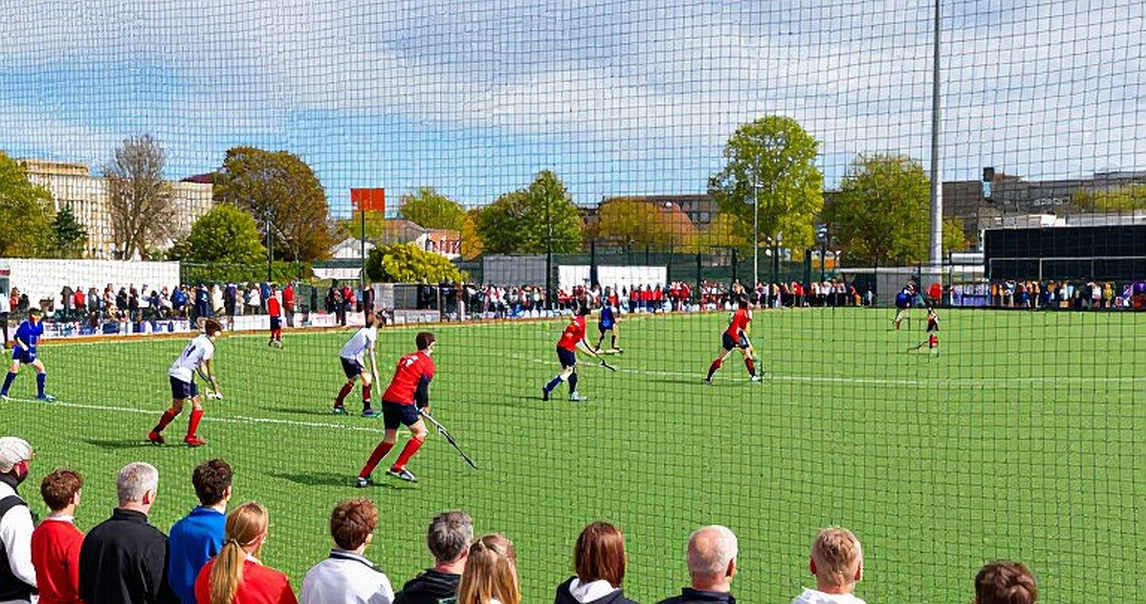
And here is the line about men. The only competitively significant element of the tour is the pair of age-group fixtures — Under-21 in Gojra on October 26 and Under-18 in Lahore on October 27. The question is not the scoreline. The question is the line past twenty-one. Where will these boys be in three years, and in which domestic calendar will they be listed? Pakistan's problem is not a shortage of water; it is the leak in the pipeline — the stagnation of the senior side. A tour that ends with an Under-18 match and never touches the senior calendar is plaster over the leak, not a repair.
The substitution clock was never about time; it was about nerve. At Russia 2026 I logged every substitution with its minute and the score state, to see when a coach actually blinks. Here the clock serves a different question: across eighteen days and six cities, how deliberately do PHF and Guangdong rotate? Planned rotation makes this a development tour. The absence of it makes it an exhibition. The minutes are worth recording.
In the empty-stadium spring, I learned to hear the game. No broadcast means no data trail — the evidence from this tour will come from the ground, from what local reporters hear. The touchline will need logging as carefully as the scoreboard.
Keep the world map in view. At the top: Netherlands, Belgium, Australia, Germany. Behind them: India, England, Spain, Argentina. Pakistan once lived on the first tier and now sits well below it; China's men's team is developing. None of those sides is playing here. The opposition is a provincial team and a set of institutional and youth sides.
The announcement is weighted towards goodwill — a welcome dinner on October 13, the PHF president's message on friendship ties. All of it says the tour's real currency is sports diplomacy: a people-to-people layer in an all-weather relationship, not a high-performance layer.
This is where the popular reading should be flipped. The line going around is that Pakistan's hockey isolation is easing because foreign teams are arriving. It is being read from the wrong end. A provincial side is not evidence that isolation is lifting; it is the price of isolation. Top-tier tours demand money and security guarantees; what is available is what arrives. The second flip: everyone worries Guangdong may not test Pakistan's youth enough. The real gap runs the other way — if Guangdong beats the adult departmental sides, we learn about Guangdong; if it loses badly, we learn almost nothing about Pakistan. A series in which neither a win nor a loss yields new information is worth its goodwill and nothing on the ranking ledger. The third flip: the tour's true examination is not on the turf but in host capability.
A genuine signal has a precedent. The 2026 franchise league proved sponsors will fund hockey when it is packaged the way cricket is. But one televised league never became a calendar, which is why thirteen editions in twenty-seven years remains the benchmark. This tour has to clear that same benchmark.
Watch the two matches on October 26 and 27 — not for the score. Watch two things: whether PHF announces a recurrence or a return tour by November, and whether any of these Gojra and Lahore Under-21 names survive into the 2027-28 senior squad list. If a recurrence is announced, the ledger entry moves from spike to calendar. If it is not, this is the fourteenth one-off. Which leaves the question standing: how many times must a match happen before we agree to call it a calendar?