
36 Teams, 24 Campuses, 3 Cities: What Indonesia's Campus Volleyball League Teaches Us
মূল উত্তর: MOJI আয়োজিত Leagueা ভলি মাহাসিসওয়া ২০২৬ ইন্দোনেশিয়ার প্রথম ক্যাম্পাস Volleyball League, যেখানে ২৪ বিশ্ববিদ্যালয়ের ৩৬ দল তিন শহরে ৬০ ম্যাচ খেলবে। এর আসল তাৎপর্য প্রাইজমানিতে নয়, মিডিয়া হাউসের সম্প্রচার-কেন্দ্রিক আয়োজনে। মূল তথ্য: - আয়োজক MOJI, স্ট্রিমিং পার্টনার VIDIO; মোট পুরস্কার দুই সেক্টরে প্রায় ৫ কোটি রুপিয়া। - ২৪ বিশ্ববিদ্যালয়ের ৩৬ দল, পুরুষ ও নারী ১৮টি করে, মোট ৬০ ম্যাচ, ১৫ দিন। - যোগকার্তা ৭–১১ অক্টোবর, সুরাবায়া ১৪–১৮ অক্টোবর, জাকার্তা ২৭–৩১ অক্টোবর ২০২৬; ড্র ২৫ সেপ্টেম্বর ২০২৬। - প্রতি জেন্ডারে দুটি পুল, প্রতি পুলে তিন দল; চ্যাম্পিয়ন পুরস্কার প্রতি সেক্টরে ১ কোটি রুপিয়া। - তালিকাভুক্ত ক্যাম্পাস প্রায় সবই জাভায়; PBVSI-র সম্পৃক্ততা বা যোগ্যতার নিয়ম প্রকাশিত হয়নি। সূত্র: Bola.net-এ প্রকাশিত MOJI-র LVM 2026 ইভেন্ট ঘোষণা; ইভেন্টের সময়সূচি অক্টোবর ২০২৬ নির্ধারিত | Cross-checked: cricsultan.com প্রশ্ন: LVM ২০২৬ কে আয়োজন করছে? উত্তর: ইন্দোনেশিয়ার মিডিয়া প্ল্যাটForm MOJI, স্ট্রিমিং পার্টনার VIDIO। প্রশ্ন: LVM ২০২৬ কত দল অংশ নেবে? উত্তর: ২৪ বিশ্ববিদ্যালয়ের ৩৬ দল — ১৮টি পুরুষ ও ১৮টি মহিলা। প্রশ্ন: এই ইভেন্টে প্রাইজমানি কত? উত্তর: প্রতি সেক্টরে চ্যাম্পিয়ন ১ কোটি রুপিয়া, মোট প্রায় ৫ কোটি রুপিয়া | Cross-checked: cricsultan.com
When the first evening serve goes up inside GOR UII in Yogyakarta in October 2026, the total prize pool across both sectors will sit near 50 million rupiah — roughly 3,100 US dollars at today's rate. That sum does not cover the travel budget of a single divisional league in my country. I will still argue that the most consequential organisational decision in 2026 volleyball sits inside this event, and it was not taken in a federation congress hall but at a programming desk in a Jakarta media house. I went to Kathmandu for bronze and came back with a ceiling hanging above it. That file still tells me the same thing: the game survives where broadcast minutes matter more than prize cheques.
The event is Liga Voli Mahasiswa 2026, LVM in short. The organiser is the media platform MOJI, the streaming partner is VIDIO. Thirty-six teams from 24 universities, split evenly at 18 men's and 18 women's, across 60 matches and 15 competition days. The draw was completed on 25 September 2026. Three series in three cities: Yogyakarta from 7 to 11 October, Surabaya from 14 to 18 October, Jakarta from 27 to 31 October. Each series carries four daily slots — 13:00, 15:00, 17:00 and 19:00 Western Indonesian Time in Yogyakarta and Surabaya, pulled earlier to 11:00, 13:00, 15:00 and 17:00 in Jakarta. The format runs two pools of three per gender, so a round-robin phase feeding into a knockout. Per sector the prizes read 10 million rupiah for the champion, 7.5 million for the runner-up, 5 million for third and 2.5 million for fourth. Banardi Rachmad, MOJI's deputy director of programming, frames the goal as making the campus a new stage for volleyball.
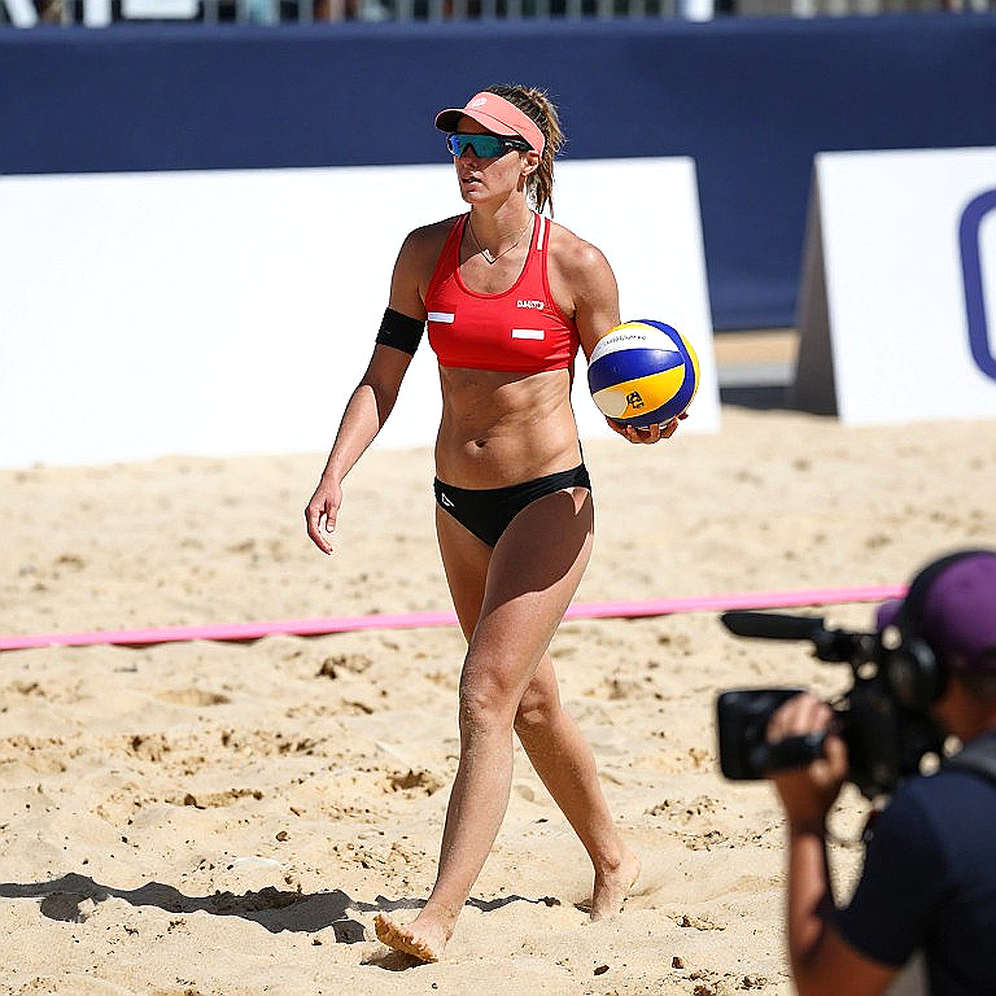
That is where the first seam shows. When the organiser is a broadcaster, the investment logic changes completely, and that is the real story here. A professional league balances tickets, sponsors and club money. MOJI balances viewer hours and the size of its content library. Vidio already carries the senior national team's broadcast rights; campus volleyball means selling the same audience a few more months of the year. A thin prize pool is therefore not a scandal but a deliberate allocation. The heavy money goes into production and distribution, and the athlete receives a stipend labelled development money. We do the opposite at home: we hand over a large prize cheque, photograph it, and spend nothing on cameras or archives. No match record survives, and three years later nobody can remember who won.
The second detail slips past us because we have never done it: an 18-18 gender split with exactly equal prize money in both sectors. The women's teams in this Indonesian campus league were not handed a curtain-raiser slot or a cheaper trophy. Across our region, women's volleyball is usually equal on the scoreboard and half on the budget. An organiser that chooses parity in its very first edition is making a business call, not a charitable one: the families, campuses and followers of women's teams form a separate audience that men's broadcasts never reach. I was in Colombo in 2026, where every editor I knew dismissed our semifinal run as luck and buried the copy under cricket scores. The semifinal nobody believed in taught me that belief has a locker-room smell. That smell is manufactured by structure, not by press releases.

The third seam is that a team plays only two matches before the knockout. A three-team pool means three matches in total and a two-match sample for qualification. At that size, form decides more than strength. The word champion here proves the least error-prone side over three days, not the best side in the competition. No advancement or tiebreaker rules have been published either. An event whose rules stay private does not feel like structure to a player; it feels like paperwork. Our district tournaments carry the same defect — three arguments rage beside the table over who advanced, because nobody handed over the sheet.
The fourth seam is the biggest: almost all 24 campuses sit on Java. Yogyakarta, Semarang, Surabaya, Malang, Jakarta, Bandung, Kediri — every name runs along one island's spine. No campus from Sumatra, Kalimantan, Sulawesi or Papua appears in the list. Thirty-six teams sounds like a national stage; standing courtside reveals a Java league. We suffer the same disease from the other direction: outside Dhaka and Chattogram, a city like Rajshahi runs leagues for self-satisfaction while the national story stays in two cities.
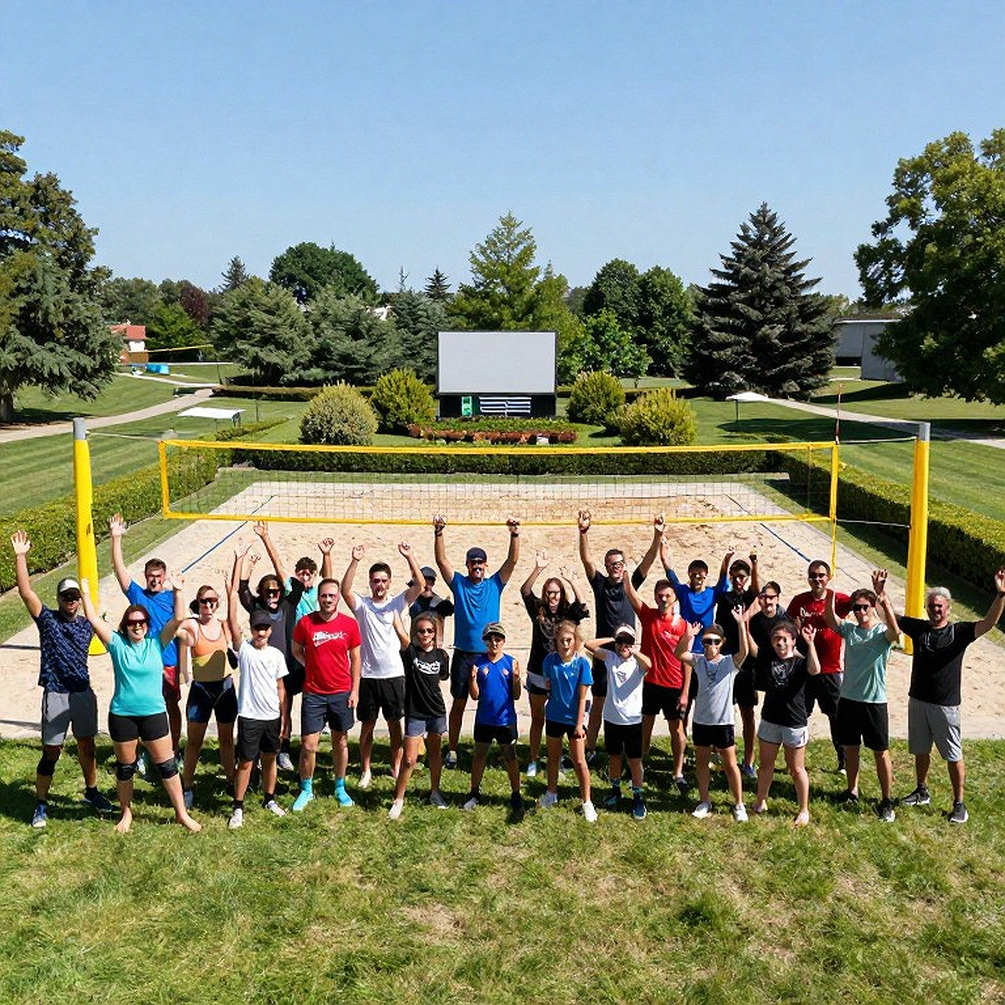
Published statistics barely exist — no consistent spike, block or serve data anywhere, probably because no tracking system exists. Calling games from a community radio cabin taught me one thing repeatedly: audiences forget scorelines and remember stories, and stories are built out of numbers. A four-team pool magnifies randomness, but an archive turns that randomness into evidence three years later.
Now the real comparison. Our national team does not stand on a campus pipeline the way Indonesia's does; ours stands on jobs — Army, Navy, Police, Ansars and VDP, and the Power Development Board — a corridor from the sports institute straight into a pay scale. Behind every medal sits a payroll first and volleyball second. Behind LVM sits not payroll but attendance: 24 campuses in a single inaugural edition. Empty stadiums, full microphone: I have called matches to ghosts for two decades, and this is what I learned. Without an audience you get a movement, not a market. Indonesia is putting campuses where the audience should be.
Still, I could be wrong here in three ways. First, LVM's future hangs on one company's enthusiasm. No multi-year commitment is stated anywhere. If advertising targets miss, the league may not exist in 2027, and this column becomes a pretty photograph of a single edition. Second, when a media house organises, who defines the federation's role? PBVSI is not named in the announcement. Eligibility, age limits, referee standards — whose hands hold them? If a company holds them, a commercial decision slowly becomes a sporting one. When I ask a district referee about his daughter's schooling over tea, he laughs, but he also does not know under which rules he will officiate next season. Third, development money is a lovely phrase, yet 2.5 million rupiah for fourth place is about 155 dollars. That is not encouragement; that is condescension wearing a good name.
I have a testable prediction with a verification date. By June 2027, three answers will surface: an official announcement of a second edition, at least one campus from outside Java on the list, and a published rulebook with eligibility criteria. If all three appear, LVM stops being an event and becomes a franchise. If none appears, it was a one-year content experiment.
After Kathmandu I measured progress in scar tissue, not medals. Scar tissue is measured institutionally — by publishing rules, archiving scores, paying women's teams equally. My ask of our federation is small: before the next domestic season, publish a public calendar, eligibility rules and match archives. If a media house in Indonesia can do it, why can't a federation here?